01 / Products

Live products.

Two products built independently — both live, both running, both happy to demo. The screens give you the shape; the depth is a 20-minute conversation away.

2 products · both liveWalkthroughs on demand
01 / Product

JourneyLint

Evaluate flows, not isolated screens.
Ready · happy to demo
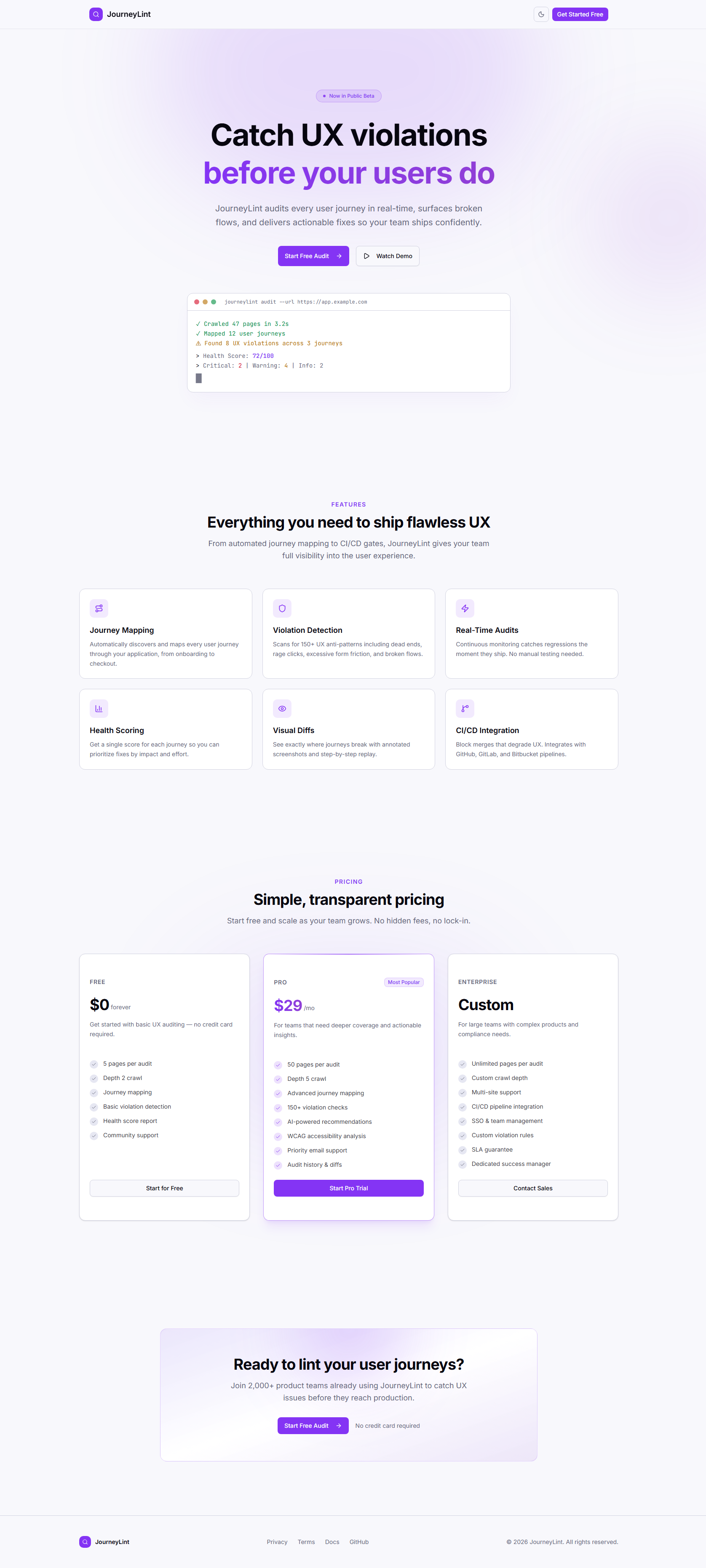
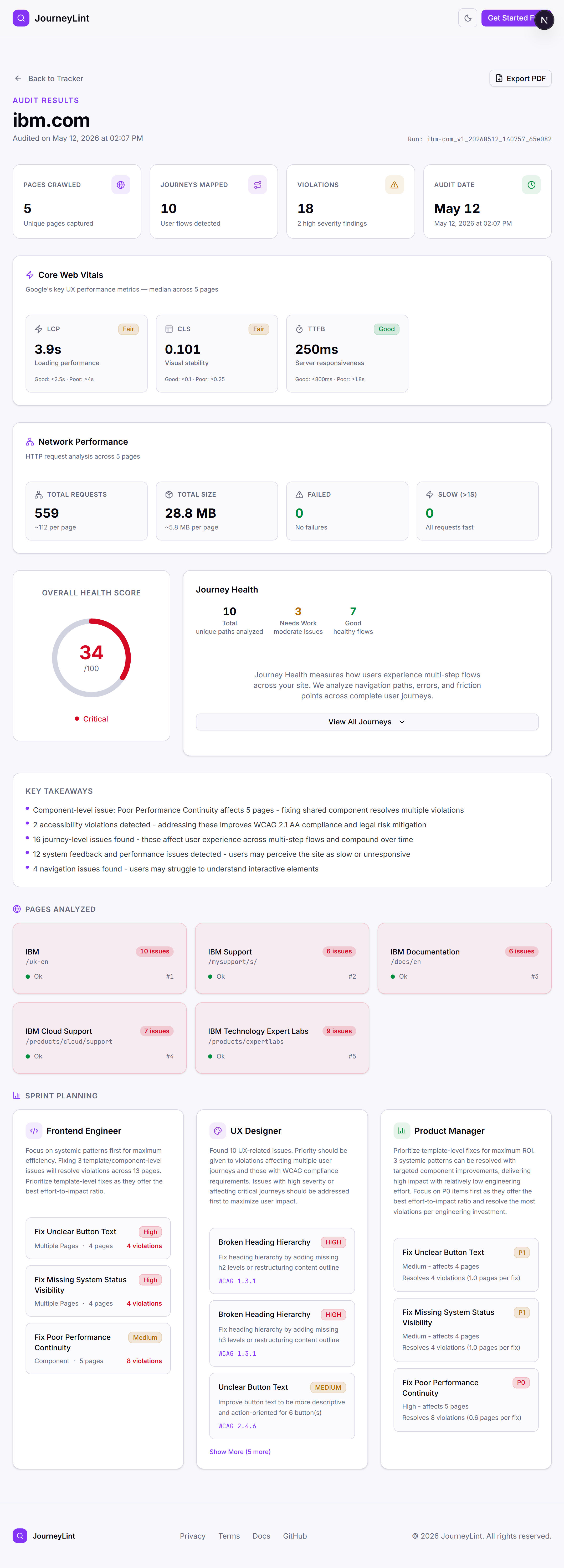
JourneyLint — primary surface
Audit dashboard.
The problem

Modern web products are not pages — they are journeys. Yet most evaluation tools still audit one URL at a time. Lighthouse measures performance per screen. axe and WAVE check accessibility per page. Heuristic reviews happen manually, when there is time, which is rarely. UX issues that emerge between screens — broken focus management, inconsistent patterns, compounding latency, repeated friction caused by shared layouts — fall through every crack.

The result is familiar to anyone who has shipped a product at scale: dashboards full of green scores, and users who still find the journey confusing. JourneyLint exists because what teams actually need is a tool that thinks about the product the way users experience it — as a sequence of decisions across screens — and tells them what to fix first.

The approach

JourneyLint analyses real user journeys end-to-end and surfaces systemic patterns rather than isolated defects. It combines measurable signals with structured heuristics and contextual reasoning, designed specifically to scale across products with hundreds of screens. The output is a prioritised, evidence-backed roadmap — not another flat list of warnings. Full technical detail available under NDA for serious enquiries.
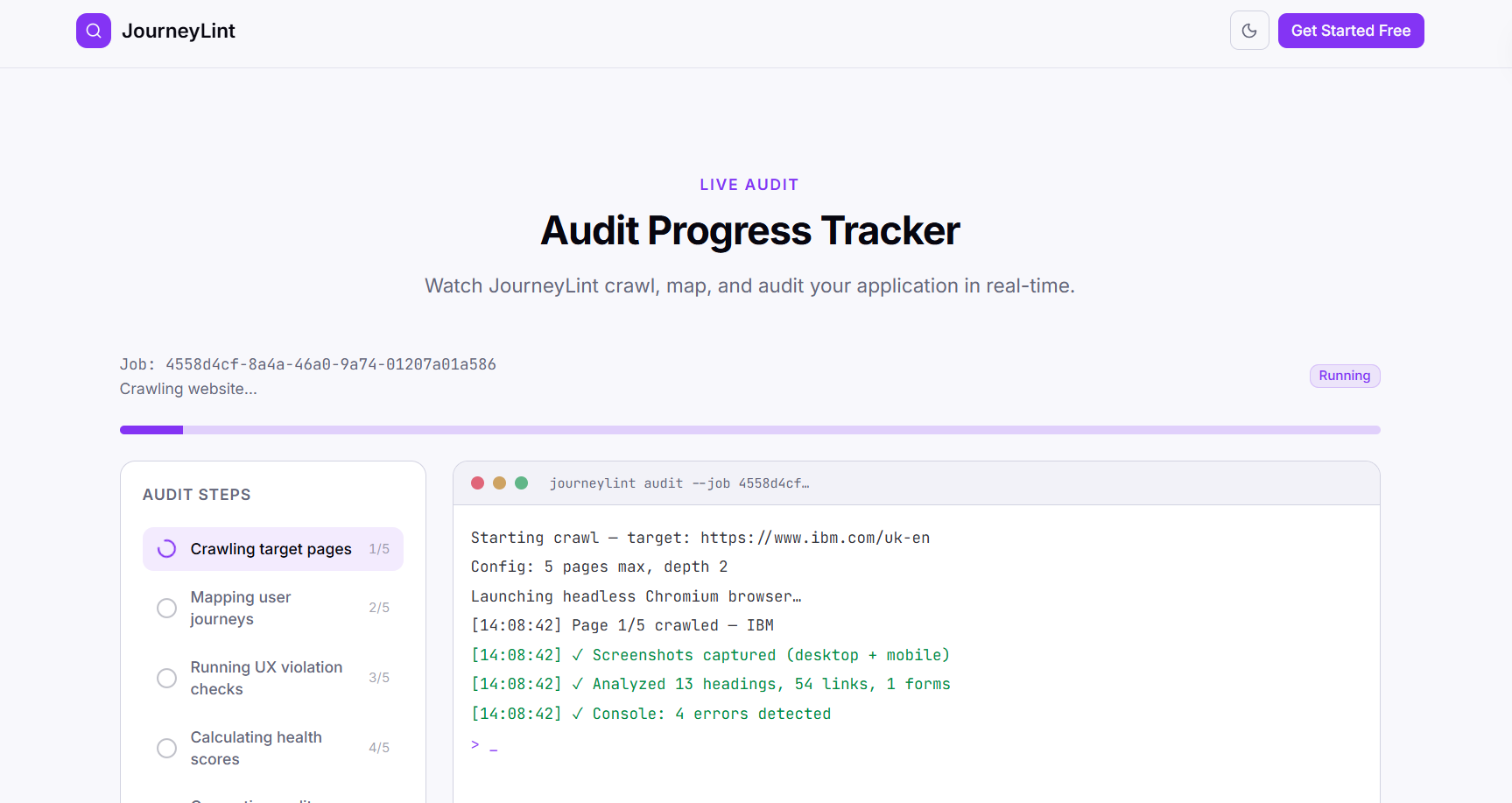
JourneyLint — secondary surface
Findings panel.
Who it's for
  • Frontend leads and architects responsible for UX quality across a large codebase
  • Design system owners trying to catch inconsistencies before they ship
  • Product teams who need audit findings translated into sprint-ready decisions
JourneyLint — detail surface
Per-screen breakdown.

Curious? Let's chat.

Happy to give you a walkthrough, share the architecture, or just talk shop about the problem space.

Get in touch

Built independently. Open to collaborations and conversations.
02 / Product

KiteSignal

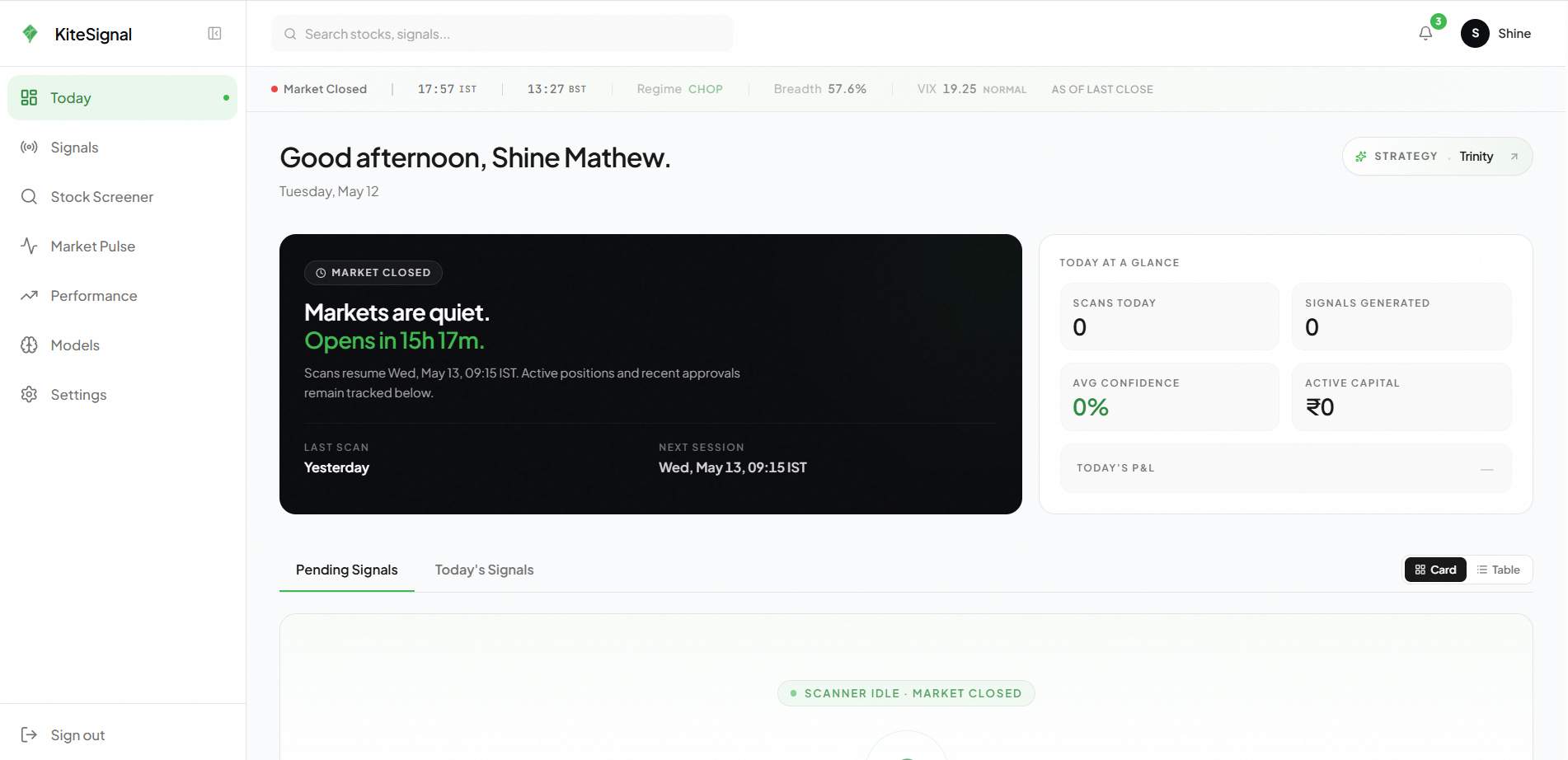
AI-generated swing trade signals for the NSE.

Live · happy to demo
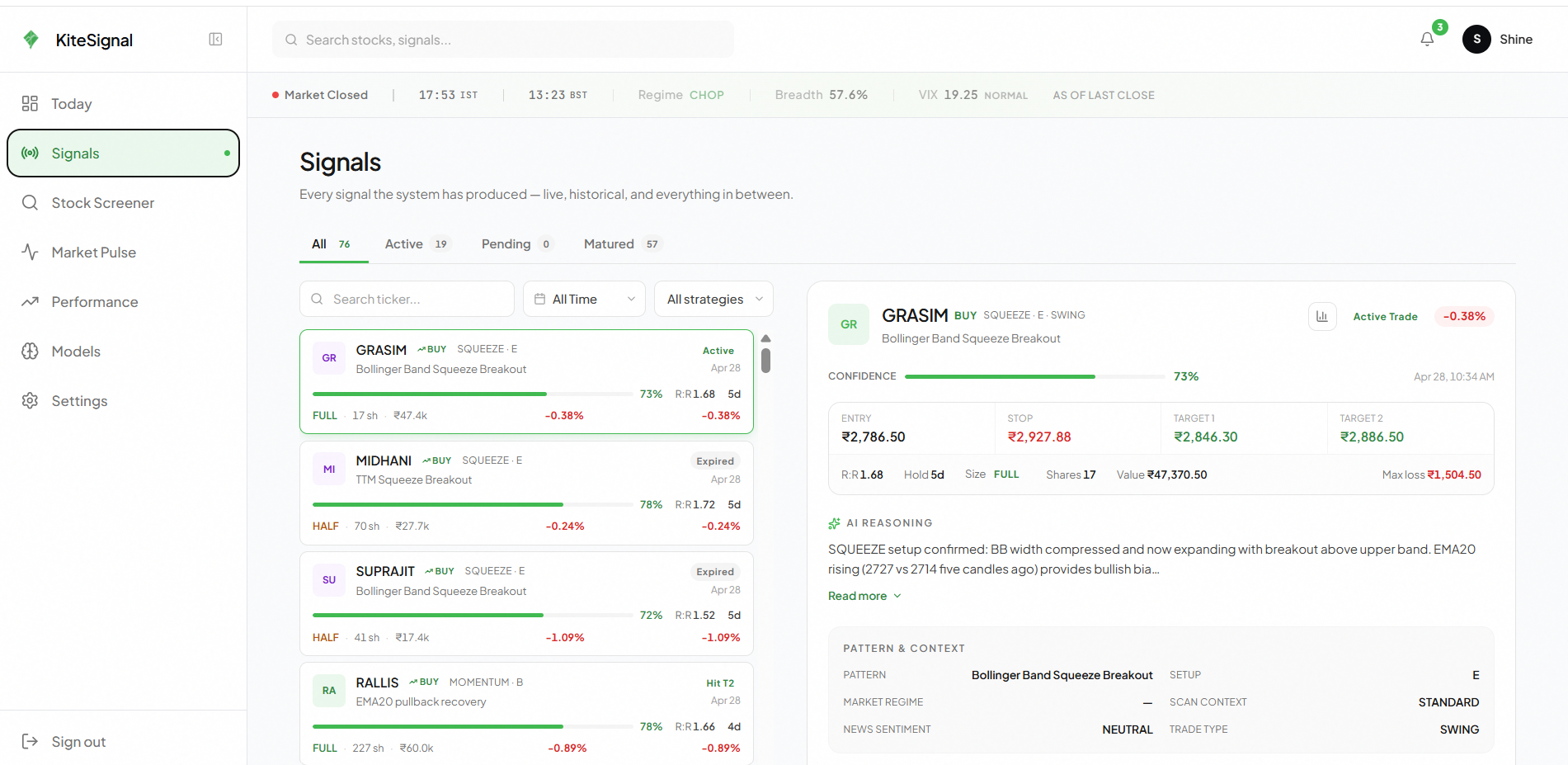
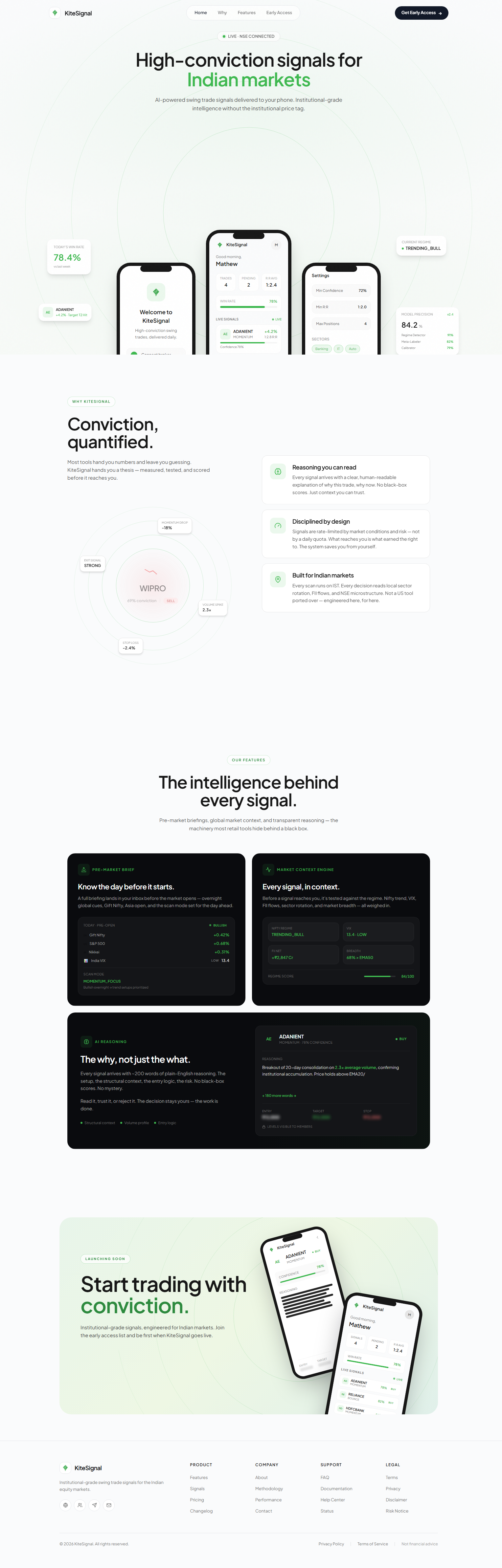
KiteSignal — primary surface
Signal alert detail.
The problem

Retail traders in India operate in an information asymmetry. Institutional desks have screeners, quants, risk models, and analysts running in parallel. Retail has YouTube, Telegram tip groups, and gut feeling. The signal-to-noise ratio is brutal, and the cost of acting on a bad call is paid in real capital.

KiteSignal exists to give individual traders access to a decision process closer to what institutions run — methodology rather than hot takes, evidence rather than narrative, and a transparent audit trail behind every alert so users can decide for themselves whether to trust it.

The approach

KiteSignal screens the NSE universe through institutional methodology — trend structure, relative strength, accumulation patterns — and runs surviving candidates through a multi-stage reasoning chain before any signal is published. Every alert ships with its full audit: scores, risks, invalidation conditions, and the reasoning behind the call. Architecture details available under NDA.

KiteSignal — secondary surface
Watchlist surface.
Who it's for
  • Retail swing traders on the NSE who want institutional-grade screening without the institutional cost
  • Active investors who need an audit trail behind every signal, not just a buy/sell ping
  • Researchers and partners interested in collaborating on AI-driven market analysis
KiteSignal — detail surface
Reasoning trail.

Curious? Let's chat.

Happy to give you a walkthrough, share the architecture, or just talk shop about the problem space.

Get in touch

Built independently. Open to collaborations and conversations.